Someone Else's Lucky Night Is Costing You Money: The Psychology of Watching Others Win
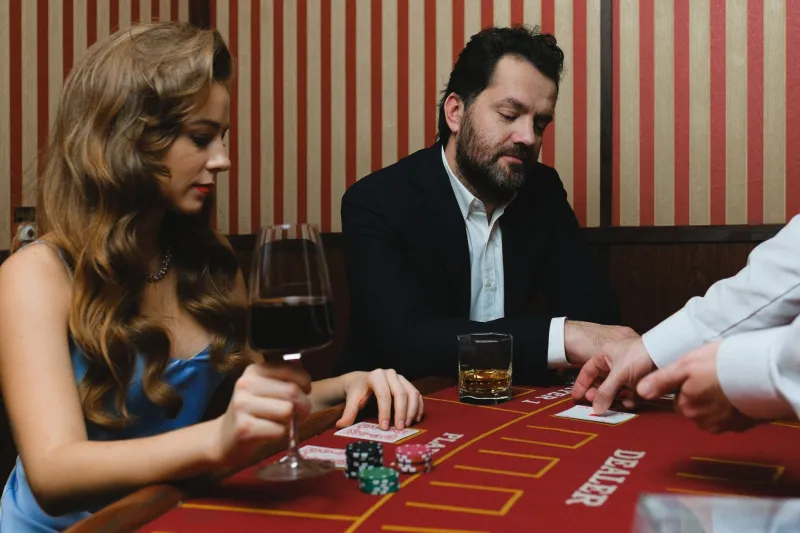
Picture this: you're at a live dealer blackjack table at W69Z Casino, playing a steady, disciplined session. Your bets are reasonable. Your decisions are clean. Then the player in seat three hits a natural blackjack on a $200 bet, doubles down on the next hand, and walks away from a five-minute stretch $600 richer.
You feel it immediately. Something shifts. The bet you were about to place at $15 suddenly feels inadequate. A voice somewhere in the back of your head starts doing math about what you could have won if you'd been betting at that level. And almost without deciding to, your next wager is $40.
This isn't weakness. It's neuroscience. And understanding it is one of the most valuable things a serious casino player can do.
The Comparison Engine in Your Brain
Humans are relentlessly comparative creatures. Our brains didn't evolve in isolation — they evolved in social groups where monitoring what other people were doing and adjusting our behavior accordingly was a genuine survival advantage. If someone in your group found a food source, copying their behavior made sense. If someone else's strategy was producing better results, adopting it was rational.
The problem is that this comparison engine doesn't distinguish between situations where copying others is sensible and situations where it's actively harmful. At a casino table, watching someone else win doesn't mean their betting strategy is better. It means variance happened to favor them in that moment. But your brain registers it as evidence — evidence that bigger bets produce bigger returns, that fortune is available, that you're missing out by playing conservatively.
This is what psychologists call social comparison bias, and in gambling environments it operates at a particularly intense level because the wins are visible, dramatic, and emotionally charged in ways that losses typically aren't.
Why Live Tables Are Designed to Maximize This Effect
Live dealer games are the most socially immersive format in online casino play. You're watching real people, real cards, real reactions. The chat function lets players celebrate wins publicly. Dealers acknowledge big hands with visible enthusiasm. The whole environment is optimized for engagement — and engagement, in this context, means emotional investment.
That emotional investment is a double-edged sword. It makes live dealer games genuinely entertaining in ways that RNG games struggle to match. But it also means you're constantly exposed to other players' results, and those results are filtered through your comparison engine in real time.
When seat four hits a lucky streak, you don't see the 40 minutes of quiet losses that preceded it. You see the streak. When seat two folds a hand that would have won, you don't see it as a correct strategic decision made with incomplete information — you see it as a missed opportunity. The visible data is heavily skewed toward wins and near-misses, and your brain builds its model of the session's 'reality' from that skewed sample.
The Streaming Effect: Watching Wins That Aren't Even Happening to Real People
If live tables amplify comparison bias, casino streaming culture takes it to an entirely different level. Platforms like Twitch and YouTube host thousands of hours of casino content where streamers play at stakes most viewers will never approach, hit jackpots with suspicious frequency (a topic for another article), and react with theatrical excitement to every significant win.
Viewers of this content are marinating in a curated feed of wins. The algorithm surfaces the biggest hits. The streamers clip and highlight the memorable payouts. The ordinary, grinding, loss-heavy reality of extended play is edited out entirely.
Research on social media and financial behavior has repeatedly demonstrated that exposure to others' apparent success inflates people's estimates of their own likely success in similar activities. Casino streaming is essentially a social media feed for gambling outcomes — and it carries all the same distortions.
Players who consume significant amounts of casino streaming content before or during their own sessions have been shown to make larger initial bets, escalate stakes more aggressively after losses, and underestimate the role of variance in the wins they've watched. The comparison trap doesn't require the other person to be in the same room.
What Happens to Your Actual Decision-Making
The behavioral consequences of comparison bias in gambling environments are well-documented. Here's what the research and real-world observation consistently show:
Bet escalation without strategic justification. Players increase their wagers after watching others win not because their own position has improved, but because the social reference point has shifted. Your $15 bet felt appropriate before the big win at the next seat. It feels insufficient afterward — even though nothing about your actual bankroll or odds has changed.
Loss of baseline anchoring. Before the comparison event, you had a clear sense of what a reasonable bet looked like for your session. After watching a big win, that anchor drifts upward. You're no longer measuring your bets against your own bankroll and risk tolerance — you're measuring them against what you just saw someone else win.
Shortened time horizons. Comparison-triggered risk-taking tends to produce a 'get rich quick' mentality within a session. Instead of playing for sustained, managed entertainment, you start swinging for a single big outcome. This is almost universally bad for your bottom line.
Misattribution of skill. When you watch someone win at blackjack, your brain often attributes the win to their decision-making rather than to luck. This is particularly dangerous because it encourages you to copy their betting behavior — which may have been reckless — under the assumption that it was smart.
Breaking the Comparison Loop
The first and most powerful intervention is awareness. Simply knowing that your brain is running this comparison program in the background makes it easier to catch the moment when your bet is about to inflate for the wrong reasons.
Before you place any bet that's larger than your established session standard, ask yourself one question: Am I raising this because my strategy calls for it, or because I just watched someone else win? If the honest answer is the latter, hold the original bet.
For live dealer play specifically, consider using the chat function less and focusing more on your own cards. The social dimension of live tables is genuinely enjoyable, but it's also a constant stream of comparison data. Selective attention is a legitimate defensive tool.
For streaming and content consumption, be deliberate about what you watch before a session. If you've just spent an hour watching a streamer hit jackpots, your reference point for a 'normal' casino session is already distorted before you've placed a single bet.
The Loneliest Table Is Sometimes the Smartest One
There's a reason that some of the most disciplined casino players prefer RNG games over live tables for their serious sessions — not because the odds are better (they're often comparable), but because the social comparison element is removed. When it's just you and the software, there's no seat four to envy, no dramatic reaction to process, no visible win to recalibrate against.
That's not an argument against live dealer games. They're genuinely entertaining and W69Z Casino's live tables are worth your time. But it is an argument for knowing yourself well enough to recognize when the social environment is working against your decision-making.
Someone else's lucky night is their lucky night. It says nothing about yours. The moment you start playing their session instead of your own is the moment you've handed them the most expensive form of entertainment available: your money.