Your Brain at 2 AM: The Hidden Cost of Late-Night Casino Sessions
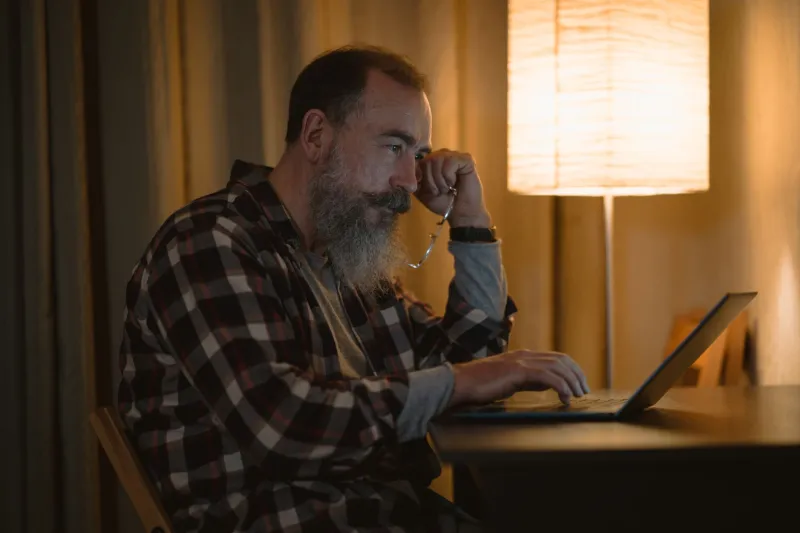
There's something seductive about firing up a casino session when the house is quiet and the rest of America is asleep. No distractions. No interruptions. Just you, the glow of the screen, and a live dealer dealing cards from somewhere overseas. It feels focused. It feels like your time.
It isn't.
What's actually happening inside your skull during those midnight-to-4-AM sessions is a lot less flattering than the vibe suggests. And if you're a US player who regularly logs on after the late news, the science says your bankroll is absorbing damage you probably aren't even tracking.
What Circadian Rhythms Actually Do to Your Judgment
Your body runs on a roughly 24-hour biological clock called the circadian rhythm. It governs sleep cycles, hormone release, body temperature, and — critically — cognitive function. Decision-making quality, risk assessment, and impulse control all fluctuate across that cycle. They peak in the late morning to early afternoon for most adults and fall off sharply after 10 PM.
This isn't a minor dip. Research published in Nature and replicated across multiple sleep science institutions shows that going 17 to 19 hours without sleep produces cognitive impairment equivalent to a blood alcohol content of 0.05% — approaching legal intoxication levels in most US states. Push past 24 hours awake, and you're looking at BAC-equivalent impairment above 0.10%.
Now think about what you're doing at a blackjack table with those numbers in your head.
The Midnight Gambler Profile
Late-night casino players in the US tend to cluster into a few recognizable types: the shift worker unwinding after a long day, the insomniac looking for distraction, the recreational player who simply didn't get around to it until now. What these players share isn't a time zone problem — it's a neurological one.
Sleep-deprived brains show measurably reduced activity in the prefrontal cortex, the part of the brain responsible for rational evaluation, long-term thinking, and — this is the big one — stopping when you're ahead. What gets louder when the prefrontal cortex quiets down? The limbic system. Emotion. Impulse. The part of your brain that says one more spin, you're due.
This is exactly the cognitive environment casinos, historically, have been engineered to exploit. The good news for online players is that you control your own environment. The bad news is that most don't use that control.
Time Zone Math for US Players
Here's where it gets practically useful. The US spans six time zones, and the optimal play windows differ meaningfully across them.
- Eastern Time players face the sharpest late-night risk. The prime impairment window — midnight to 4 AM ET — coincides with peak live dealer availability from European studios, creating a perfect storm of temptation and cognitive vulnerability.
- Central and Mountain Time players get a slight buffer. Midnight CT is 1 AM ET, meaning European live tables are still fully staffed. But your brain is still running the same degradation schedule.
- Pacific Time players have the most dangerous setup of all. Prime Pacific evening hours — 9 PM to midnight — fall during the 12 AM to 3 AM ET window when US players on the East Coast are already compromised. Pacific players are relatively fresh, but they're sharing tables and lobby energy with players making worse decisions, which can create false confidence.
The practical guidance here is simple but underused: set a hard stop time and keep it. Most serious players set loss limits. Far fewer set clock limits, and the data suggests the clock limit may actually matter more for session quality.
Sleep Debt Is a Cumulative Tax on Your Play
Here's the part most players miss entirely: you don't have to be pulling an all-nighter to feel the effects. Sleep debt — the accumulated deficit from consistently sleeping six hours instead of eight — produces the same impaired judgment as acute sleep deprivation, often without the subjective feeling of being tired.
In other words, if you've had a rough week of short nights and you sit down at a poker table at 9 PM on Friday feeling fine, you may be operating at the cognitive equivalent of someone who's had two or three drinks. You feel sharp. The math disagrees.
A 2021 study from the University of Pennsylvania's Center for Sleep and Circadian Neurobiology found that participants with chronic mild sleep restriction consistently overestimated their own alertness and performance quality — even as objective measures showed significant decline. They didn't know they were impaired. That's the dangerous part.
What Smart Players Do Instead
None of this means you can't play at night. It means you need to play differently at night.
A few adjustments that hold up under scrutiny:
Drop your session stake. If you'd normally sit down with $200, cut that to $100 for late-night sessions. Your decision-making is degraded; your exposure should reflect that.
Stick to lower-volatility games. This isn't the time for high-variance slots or aggressive poker hands. Baccarat, even-money roulette bets, and conservative blackjack play are more forgiving of the small judgment lapses that come with fatigue.
Set a 45-minute hard cap. Research on cognitive fatigue suggests that decision quality deteriorates fastest in the first 45 to 60 minutes of a fatigued session. Play short, play deliberate, and log off before the compounding errors start.
Use the W69Z session tools. Setting pre-session limits isn't just a responsible gambling feature — it's a practical defense against the version of yourself that shows up at 1:30 AM thinking he's got this figured out.
The Bottom Line
The timezone trap isn't really about time zones. It's about the gap between how capable you think you are and how capable you actually are when the clock pushes past midnight. That gap costs US players real money every night, spread across thousands of sessions that felt sharp in the moment and looked very different in the morning.
Play bold, sure. But play with a brain that's actually online. Your best sessions happen when you do.