Live Dealer or RNG? Breaking Down Which Casino Format Actually Works Better for You
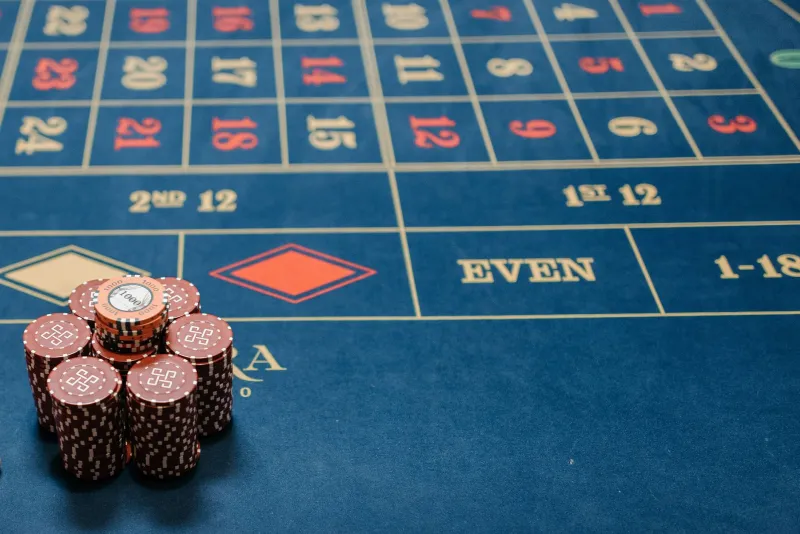
Walk into any online casino today and you're immediately faced with a fork in the road: the slick, instant-play world of RNG (Random Number Generator) games, or the immersive, real-time experience of live dealer tables. Both options carry the same game names — blackjack, roulette, baccarat — but they deliver fundamentally different experiences.
So which one is actually better? The honest answer: it depends entirely on what you're after. But let's get into the specifics, because the differences go a lot deeper than "one has a real person and one doesn't."
What's Actually Going On Under the Hood
Before comparing the two formats, it helps to understand what each one actually is.
RNG games use a certified random number generator — essentially a sophisticated algorithm — to determine every outcome. When you click "deal" in an RNG blackjack game, a computer instantly calculates a statistically random result. There's no physical deck, no shuffling, no delay. Independent testing labs like eCOGRA and GLI audit these systems regularly to confirm they're genuinely random and not rigged toward the house beyond the stated house edge.
Live dealer games stream real-time video from a physical studio — typically located in places like Latvia, Malta, Georgia, or the Philippines — where actual human dealers manage real cards, real roulette wheels, and real equipment. You watch the action unfold on camera, place bets through a digital interface, and interact with the dealer and sometimes other players via chat.
Both formats are legitimate. Both are used by millions of American players. But they're optimized for very different things.
The Math: Does the Format Change the House Edge?
This is the question most players care about most, so let's address it directly.
In theory, the house edge on equivalent games should be the same regardless of format. A standard blackjack game with the same rules — dealer stands on soft 17, blackjack pays 3:2, double after split allowed — carries the same mathematical house edge whether you're playing against an RNG or a live dealer. The rules determine the edge, not the delivery mechanism.
In practice, though, there are some nuances worth knowing.
RNG games sometimes use rule variations that shift the edge. You might encounter RNG blackjack that pays 6:5 on blackjack instead of 3:2, which raises the house edge from roughly 0.5% to over 2%. Always check the paytable before you play, regardless of format.
Live dealer games occasionally offer unique bet types — side bets like Perfect Pairs or 21+3 in blackjack, or neighbor bets in roulette — that carry significantly higher house edges than the base game. These are optional, but they're prominently displayed and easy to click accidentally.
Speed creates a subtle but real difference in effective hourly cost. An RNG blackjack game can deal 200+ hands per hour because there's no physical shuffling, no camera delay, no dealer chat. A live dealer table typically runs 50–80 hands per hour. If you're playing with a 1% house edge, more hands per hour means more theoretical losses per hour, even at identical bet sizes. RNG games burn through your bankroll faster simply because they move faster.
The Experience Factor: Where Live Dealer Wins Decisively
If pure mathematics were all that mattered, RNG would win on speed and accessibility every time. But casino gaming isn't purely mathematical — it's entertainment, and experience matters enormously.
Live dealer games deliver something that RNG simply cannot replicate: the social and atmospheric texture of a real casino, accessible from your couch in Columbus, Ohio at 11pm on a Tuesday.
Watching a real dealer flip cards, hearing the sound of a genuine roulette ball spinning, exchanging a quick message in the chat when you hit a lucky streak — these elements create genuine engagement that keeps players invested in the session rather than just clicking through hands mechanically.
For players who migrated from brick-and-mortar casinos to online platforms, live dealer games bridge a gap that RNG can't. The trust factor is also meaningful: some players feel more confident in outcomes they can physically observe, even though RNG games are mathematically audited to be equally fair.
Platforms like W69Z Casino have invested heavily in live dealer studios precisely because the format resonates so strongly with players who want their online session to feel like an event rather than a transaction.
Where RNG Has the Edge (No Pun Intended)
For all its atmospheric limitations, RNG gaming has real advantages that live dealer simply can't match.
Availability is absolute. Live dealer tables have minimum player limits and sometimes fill up during peak hours. RNG games are always available, always instant, always waiting. No queue, no wait, no "table full" message.
Bet sizing flexibility is far greater in RNG games. Many live dealer tables have minimum bets of $5–$25, which can be a problem for players working with smaller bankrolls. RNG games frequently offer minimums of $0.10 or $1, making them far more accessible for casual players or those using conservative unit-sizing strategies.
Game variety is incomparable. There are thousands of RNG slot titles, hundreds of video poker variants, and dozens of specialty games that simply don't exist in live dealer format. If you want to play a 243-payline slot with a mythology theme and a progressive jackpot, RNG is your only option.
Pace control is entirely yours. Some players find the slower pace of live dealer frustrating. With RNG, you set the rhythm. Play fast when you're feeling it, slow down to think through strategy — the game waits for you.
Skill, Strategy, and Social Play
For skill-based games like blackjack, the format has an interesting effect on strategy execution.
In RNG blackjack, you can play with a basic strategy chart open on a second screen without anyone caring. You can take as long as you want to make each decision. For players committed to minimizing the house edge through optimal play, RNG blackjack is genuinely the better learning environment.
Live dealer blackjack introduces social pressure — other players waiting, a dealer making eye contact, the general rhythm of a table — that can push you toward faster decisions. Experienced players handle this fine, but newer players sometimes deviate from correct strategy under social pressure, which costs them in the long run.
For purely social players, though, live dealer is unquestionably more engaging. The chat function, the ability to tip dealers, the shared experience of watching a dramatic roulette spin with other players — these elements create a communal energy that RNG can't manufacture.
So Which Format Should You Actually Play?
Here's a practical breakdown based on player type:
Choose RNG if you:
- Have a smaller bankroll and need flexible bet sizing
- Want to play slots, video poker, or specialty games
- Are learning a new game and want to practice at your own pace
- Have limited time and want fast-paced sessions
- Play late at night when live tables might be less staffed
Choose Live Dealer if you:
- Miss the atmosphere of a physical casino
- Prefer a slower, more deliberate pace
- Enjoy the social element of chatting with dealers and players
- Want to play table games with a more immersive feel
- Have a mid-to-large bankroll that clears live table minimums comfortably
The honest answer for most players: use both. Rotate between formats based on your mood, your budget, and what you're looking for from a given session. The best online casino experience isn't RNG or live dealer — it's having access to both and knowing when each one serves you better.
At W69Z Casino, that's exactly the kind of flexibility we're built to offer. Play bold in whichever format fires you up, win big when the cards and the wheel fall your way, and bet smart by choosing the experience that actually fits your goals.