Every Spin Has a Price Tag: The Real Math Behind Casino House Edge and Your Lifetime Losses
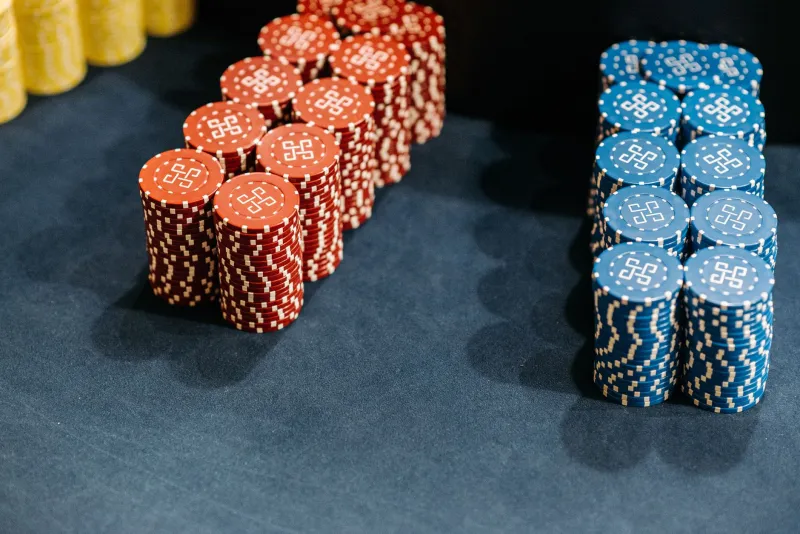
Let's get something straight before you load up your next session: the casino doesn't need to beat you dramatically. It just needs to beat you consistently. And that's exactly what the house edge is designed to do — not rob you blind in one hand, but quietly, patiently, methodically trim a little off the top every single time you play.
Most US players know the house has an advantage. What most players don't realize is how fast that advantage compounds when you multiply it across hundreds of bets, dozens of sessions, and years of play. By the time you add it all up, those small percentages represent a staggering transfer of wealth — from your wallet to the casino's bottom line.
So let's actually run the numbers.
What House Edge Really Means in Dollar Terms
House edge is expressed as a percentage of every bet you make that the casino expects to keep — on average, over a large enough sample. A 5% house edge doesn't mean you lose 5 cents every spin. It means that for every dollar wagered over thousands of bets, the casino keeps roughly a nickel.
That sounds manageable, right? Here's where it stops sounding manageable.
Say you're playing slots at $1 per spin, hitting about 500 spins per hour (pretty standard for video slots). That's $500 in total wagers per hour. With a typical slot house edge of 6%, you're handing the casino $30 every single hour — even if your balance looks totally normal because of the wins mixed in.
Play two hours a session, twice a week, 50 weeks a year? That's $6,000 quietly extracted from your bankroll annually. Not from bad luck. Not from tilt. Just from math doing math.
Slots: The Fastest Bleed in the Building
Slots carry the highest house edge of any major game category, typically ranging from 4% to 12% depending on the title, the stakes, and the platform. That wide range matters. A 4% slot and a 10% slot feel identical to play — same flashing lights, same sound effects, same dopamine hit — but the financial difference over a year of regular play is enormous.
The speed factor makes it worse. Slots are the fastest game in the casino. You're not waiting for a dealer, not thinking through strategy, not pausing between hands. You're just clicking. That velocity means the house edge gets applied more times per hour than almost any other format, and compounding losses accelerate accordingly.
If you're a regular slot player, this is the most important thing you can internalize: you're not just fighting the edge, you're fighting the edge multiplied by speed.
Table Games: A Better Deal If You Do the Work
Here's where things get more interesting for players willing to put in a little effort. Table games generally carry significantly lower house edges than slots — but only if you play them correctly.
Blackjack, played with basic strategy, can bring the house edge down to around 0.5%. That's not a typo. Half a percent. On a $10 minimum table, you're theoretically losing about $0.05 per hand. Even at 100 hands per hour, that's $5 an hour in expected losses — a fraction of what slots extract.
Baccarat hovers around 1.06% on the banker bet, making it one of the most player-friendly games in any casino. Craps, if you stick to pass line bets and avoid the proposition bet minefield, sits around 1.41%.
The catch? Most players don't play table games optimally. They take insurance in blackjack (bumps the edge significantly), they bet the tie in baccarat (house edge jumps to over 14%), and they scatter chips across the craps layout on sucker bets. The math only works in your favor if you actually follow it.
Live Dealer Games: The Middle Ground
Live dealer tables at online casinos occupy an interesting space. The house edges are comparable to their land-based counterparts — blackjack still rewards basic strategy, baccarat is still baccarat — but the pace is slower than RNG games, which actually works in your favor.
Fewer hands per hour means fewer times the edge gets applied. If you're playing live dealer blackjack at 40 hands per hour versus an RNG version at 200 hands per hour, you're literally giving the casino five times fewer opportunities to collect its cut. Slower is cheaper when you're the one on the wrong side of the percentage.
That said, live dealer games can also tempt you into longer sessions because they feel more social and engaging. Stay aware of total time at the table, not just the per-hand math.
The Compounding Problem Nobody Talks About
Here's the part that really stings: house edge doesn't just apply to your starting bankroll. It applies to your total action — every dollar wagered, including money you've already won and are now re-betting.
Imagine you deposit $200 and run it up to $350 through a good early session. That $350 doesn't reset the clock. Every bet you make with those winnings is still subject to the same house edge. The casino doesn't care that the money used to be yours — once it's in play, it's all subject to the same mathematical grind.
This is why long sessions almost always favor the house more than short ones. The longer you play, the more your results converge toward the expected value — which is negative for you and positive for the casino. Short sessions with disciplined exits are one of the few genuine tools players have against compounding losses.
What Smart Players Actually Do With This Information
Knowing the math doesn't mean walking away from the games. It means making smarter choices about which games you play, how long you play them, and what you expect going in.
A few practical moves:
- Choose games with lower house edges. If you're going to play regularly, blackjack with basic strategy or banker-bet baccarat will bleed you far slower than slots.
- Set a wager volume limit, not just a loss limit. Track total dollars wagered per session, not just your balance. That's the number the house edge is applied to.
- Shorten your sessions. Every additional hour adds another layer of compounding. Winning and leaving is a legitimate strategy.
- Understand variance as cover. Short-term luck can obscure the house edge, which is exactly why so many players underestimate it. A winning session feels like evidence the math doesn't apply to you. It does.
The Bottom Line
The house edge isn't dramatic. It's not a villain. It's just arithmetic, applied relentlessly, across every bet you'll ever make. Understanding it clearly — in real dollar terms, across different game types, multiplied by session frequency — is the single most useful thing any US player can do before sitting down to play.
At W69Z Casino, we're not in the business of pretending the math doesn't exist. Play bold, sure. But play with your eyes open to what the numbers are actually doing underneath the surface. That's what betting smart looks like.