That Slot Machine Doesn't Owe You Anything: The Cold Truth About 'Overdue' Numbers
The Machine Has No Memory
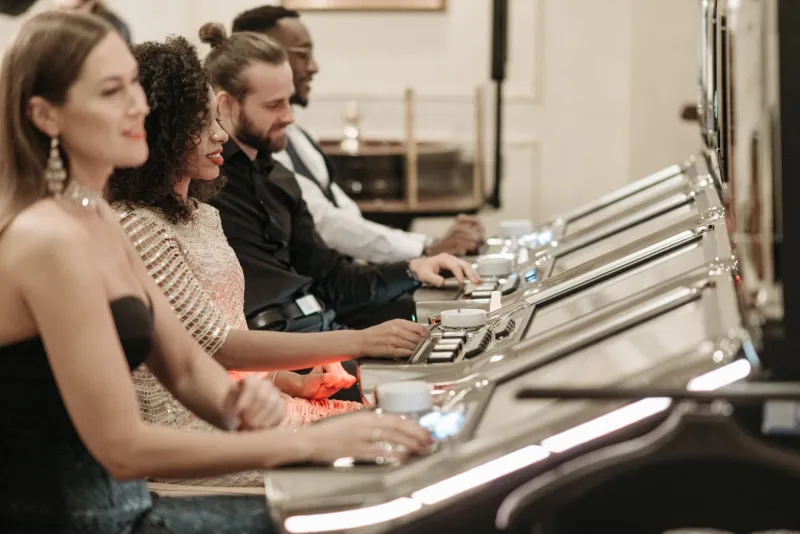
Here's a scene that plays out at online casinos every single day: a player sits down at a slot, watches it brick out spin after spin, and thinks, it has to hit soon. Maybe they even start betting bigger, convinced the universe is building toward some kind of karmic payout. It feels logical. It feels earned. And it is completely, mathematically wrong.
This is the gambler's fallacy in action — one of the most persistent and expensive cognitive mistakes in the entire world of gaming. At W69Z Casino, we'd rather you understand this upfront than learn it the hard way on your bankroll.
Slot machines, whether you're spinning on a classic three-reel or a modern five-reel video slot, are powered by something called a Random Number Generator, or RNG. This isn't marketing language — it's a real piece of software that produces thousands of randomized number sequences every second, regardless of whether anyone is even playing. When you hit that spin button, the outcome is already determined by whichever sequence the RNG landed on at that exact millisecond. Not the spin before it. Not the fifty spins before that. Just that moment, right then.
The machine doesn't track its history. It doesn't know it just gave you twenty losses in a row. It has no concept of a 'debt' to pay out. Every single spin is statistically independent.
Where the Fallacy Comes From
The gambler's fallacy actually has roots in how humans are wired to think. Our brains are pattern-recognition machines — that's been genuinely useful for survival throughout human history. If something bad happens repeatedly in a certain situation, learning to expect it and avoid it is smart. The problem is that our brains apply this same logic to truly random systems, where it has no business being.
A classic textbook example: flip a fair coin and get heads ten times in a row. Most people feel, almost physically, that tails is 'due.' But the coin doesn't know what it did ten flips ago. The odds of tails on flip eleven are still exactly 50/50. Every flip resets.
Slots work the same way, just with far more variables and much smaller probabilities. A jackpot symbol might appear on a given reel roughly once every 64 stops. The odds of hitting it across all reels simultaneously might be something like 1 in 262,144. Whether you hit it on spin one or spin one million doesn't change what the odds are on spin one million and one.
How Game Design Leans Into This Bias
Here's where things get uncomfortable: casino game designers know about the gambler's fallacy. They've known about it for decades. And while reputable platforms — W69Z included — use certified RNG systems that are genuinely random, the presentation of games can absolutely amplify this psychological trap.
Think about near-misses. You spin, and two jackpot symbols land on the payline while the third stops one position above. That wasn't a 'close call' in any statistical sense — a near-miss on a slot has exactly the same odds as any other non-winning combination. But it feels like you almost had it, which triggers the same part of your brain that says keep going, it's coming. Game studios have studied this effect extensively, and near-miss frequencies are often deliberately tuned.
Progress bars, streak counters, and bonus meters all play into this as well. When a game shows you that a bonus feature is 'loading up,' it creates the illusion of accumulating momentum — even if the actual trigger is still fully randomized. You're not getting closer to anything. The bar is a feeling, not a fact.
What This Actually Costs Players
Let's talk dollars, because that's where this gets real. Behavioral research on casino players consistently shows that the gambler's fallacy leads to two damaging patterns: chasing losses and overbetting during cold streaks.
When players believe a machine is 'due,' they tend to either stay longer than planned or increase their bet size to 'maximize' the expected payout when it finally comes. Both of these behaviors accelerate losses. If you're playing a slot with a 96% RTP (return to player), the house edge is 4% — but that edge applies to every spin independently. Betting $5 per spin instead of $1 because you think a win is imminent doesn't increase your odds; it just means when the expected losses hit, they hit five times harder.
At W69Z Casino, player session data consistently shows that the longest losing streaks tend to coincide with escalating bet sizes — a behavioral fingerprint of the gambler's fallacy in action. Players who set flat bet sizes and stick to them, regardless of recent results, tend to manage their bankrolls significantly better over time.
The Right Way to Think About Streaks
Cold streaks are real. They're not a signal that a payout is incoming — they're just variance doing what variance does. A slot with a 96% RTP doesn't mean you'll get $0.96 back for every dollar on every spin. It means that over an enormous sample of spins, the average return trends toward 96%. In a single session, you could be up 300% or down 100% and both outcomes are entirely consistent with the math.
Warm streaks are equally misleading in the other direction. Winning five spins in a row doesn't mean the machine is 'hot' or that you've found a lucky seat. It means the RNG produced favorable sequences five times consecutively, which — given enough players and enough time — is going to happen regularly.
The healthiest mindset you can bring to slot play is this: every spin is its own event. Your only real variables are how much you're betting, how long you play, and whether you're choosing games with favorable RTP percentages and volatility levels that match your bankroll. Past results are noise. They don't inform future outcomes.
Play Smarter, Not Superstitiously
None of this is meant to take the fun out of slots — they're genuinely entertaining, and the thrill of a big hit is real. But there's a difference between playing for entertainment with clear limits and playing under the delusion that you're owed something by a piece of software that has no idea you exist.
Before your next session at W69Z Casino, set a budget that you're comfortable losing entirely. Pick games based on their RTP and volatility, not because they 'feel ready.' And if you find yourself staying longer because you believe a machine is due to pay — log off. That feeling is your brain lying to you, and it's one of the most expensive lies in gaming.